
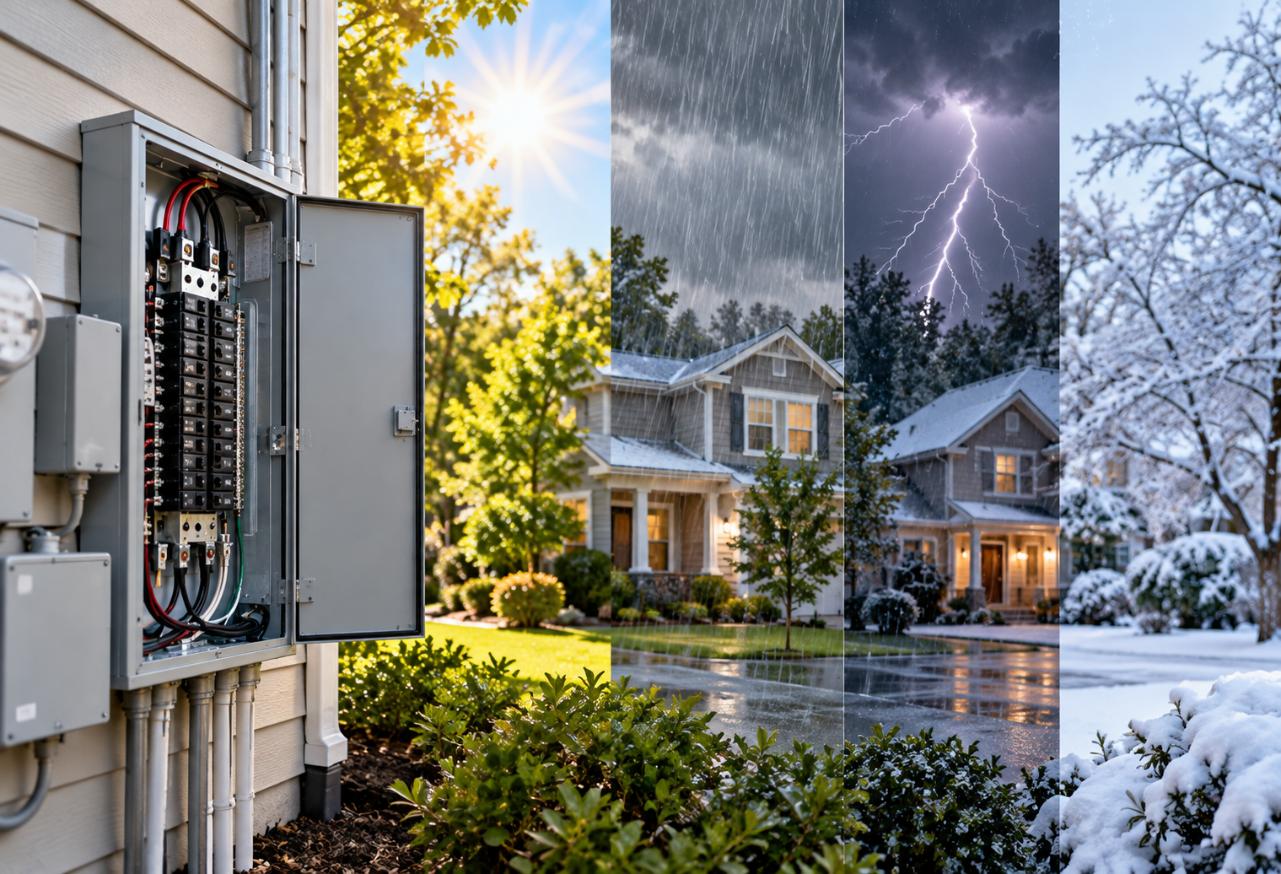
Northern Virginia homeowners experience everything from hot, humid summers and severe thunderstorms to freezing winter temperatures and occasional ice storms. While these changing weather conditions are part of living in the region, they can also put significant stress on your home's electrical system.
Understanding how weather affects your wiring, electrical panel, outlets, and connected appliances can help you recognize potential problems before they become expensive or dangerous.
Quick Answer: Weather affects your home's electrical system in Northern VA through power surges, moisture intrusion, temperature changes, and increased electricity demand. Summer thunderstorms can damage electrical equipment, high humidity can contribute to corrosion, and winter storms can interrupt power or expose vulnerable wiring. Regular electrical inspections, proper surge protection, and timely repairs can help reduce weather-related electrical risks.
What Northern Virginia homeowners should know
- Summer thunderstorms can cause sudden power interruptions and damaging electrical surges.
- High humidity in Fairfax County and surrounding communities can contribute to corrosion in exposed or poorly protected electrical components.
- Winter ice storms and strong winds can damage overhead power lines and disrupt electricity service.
- Older homes in Alexandria and Arlington may have electrical systems that need evaluation before adding high-demand equipment.
- Whole-home surge protection and professional electrical maintenance can help protect equipment throughout the year.
For homeowners throughout Northern Virginia, understanding these seasonal risks is an important part of maintaining a safe and reliable electrical system. At Walsh Electric, we understand the importance of preparing residential electrical systems for the region's changing weather conditions.
How Northern Virginia Weather Impacts Residential Electrical Systems
Northern Virginia weather can affect residential electrical systems by exposing wiring and equipment to moisture, increasing electrical demand during extreme temperatures, and causing power disturbances during storms. The combination of humid summers, thunderstorms, freezing conditions, and seasonal temperature fluctuations makes electrical protection especially relevant for local homeowners.
Summer Thunderstorms and Electrical Surges
Thunderstorms are a familiar part of summer in Fairfax, Loudoun, and Prince William counties. Lightning strikes and utility disturbances associated with storms can cause sudden voltage changes that affect household electronics and electrical equipment.
A power surge is a brief increase in electrical voltage. Depending on its strength and where it enters the system, a surge can damage:
- Computers, televisions, and home entertainment equipment
- Refrigerators and other major appliances
- HVAC equipment and electronic controls
- Smart home devices and connected security systems
- Other sensitive electronic equipment
Power strips with surge protection may provide limited protection for connected devices, but they do not protect every circuit in a home.
Whole-home surge protection provides another layer of defense by helping divert certain excess voltages before they reach connected equipment. No surge protection system can eliminate every risk, particularly from a direct lightning strike.
High Humidity and Moisture Exposure
High humidity can contribute to electrical corrosion when moisture reaches vulnerable components. In Northern Virginia, prolonged humid conditions, heavy rain, and condensation can affect outdoor outlets, electrical enclosures, and equipment installed in damp locations.
Moisture-related problems may include corroded connections, deteriorating components, and ground-fault conditions.
Homes with unfinished basements, exterior electrical installations, or poorly sealed electrical enclosures deserve particular attention.
Outdoor outlets and outlets in certain damp or wet locations require appropriate protection, including ground-fault circuit interrupter (GFCI) protection where applicable.
Winter Storms and Freezing Temperatures
Winter storms can affect your home's electrical system by damaging utility infrastructure, interrupting power, and exposing outdoor equipment to ice and moisture. In communities such as Vienna, Reston, and McLean, falling branches and ice accumulation can create electrical hazards during severe weather.
Cold temperatures also increase reliance on heating equipment.
Homes using electric heating systems, heat pumps, or portable space heaters may experience higher electrical demand during extended cold periods.
Portable heaters can create additional risks when connected to overloaded circuits or extension cords. These appliances should be plugged directly into suitable wall outlets and operated according to manufacturer instructions.
Local Data and Seasonal Electrical Observations
Northern Virginia's seasonal weather patterns create several predictable periods of electrical vulnerability. According to the National Weather Service, the Mid-Atlantic region experiences severe thunderstorms, damaging winds, winter precipitation, and occasional significant ice events.
These conditions help explain why weather-related electrical preparation should be a year-round priority rather than something homeowners consider only after an outage.
Common seasonal concerns include:
- Spring: Thunderstorms, heavy rain, and potential moisture intrusion.
- Summer: Lightning, humidity, and increased air-conditioning demand.
- Fall: Falling branches, wind events, and preparation for colder weather.
- Winter: Ice accumulation, outages, and increased heating-related electrical loads.
The exact risks vary depending on the home's age, electrical equipment, surrounding trees, and exposure to weather.
How Weather-Related Electrical Problems Affect Northern Virginia Homes
Weather-related electrical problems can affect Northern Virginia homes by damaging appliances, interrupting heating and cooling, creating unsafe electrical conditions, and increasing repair costs. The impact can be particularly disruptive when severe weather causes an outage during extreme heat or cold.
In older Alexandria neighborhoods, homeowners may need to consider whether existing electrical panels and circuits can safely support modern electrical demands.
In newer developments around Ashburn and Gainesville, homeowners may have more recently installed equipment, but lightning-related surges and utility interruptions can still affect sensitive electronics.
Weather-related electrical damage is not always immediately visible. A circuit may continue functioning even when a connection or electrical component has deteriorated.
This is why recurring electrical symptoms should be investigated instead of dismissed as normal storm-related behavior.
Warning Signs of Weather-Related Electrical Damage
Warning signs of weather-related electrical damage include frequently tripping breakers, flickering lights, burning odors, and outlets that stop working after storms. Northern Virginia homeowners should pay particular attention to symptoms that appear following heavy rain, lightning, freezing conditions, or power restoration.
Watch for these warning signs:
- Frequently tripping circuit breakers: Repeated trips may indicate overloaded circuits, damaged equipment, or electrical faults.
- Flickering or dimming lights: Persistent fluctuations may point to loose connections, utility issues, or circuit problems.
- Burning smells near outlets or panels: Unusual odors can indicate overheating and require prompt professional attention.
- Discolored outlets or switches: Darkening, scorching, or melting can indicate excessive heat or electrical damage.
- Buzzing or crackling sounds: Unusual noises from electrical components can signal unsafe conditions.
- Outlets that stop working after heavy rain: Moisture intrusion or a tripped GFCI may be involved.
- Damaged outdoor electrical equipment: Cracked covers, exposed wiring, or visible corrosion can create safety hazards.
- Appliances malfunctioning after an outage: A power disturbance may have affected electronic controls or internal components.
If you notice smoke, sparking, or signs of an active electrical fire, move away from the affected area and contact emergency services.
When to Call a Professional Electrician
You should call a professional electrician when weather-related electrical problems involve repeated breaker trips, visible damage, moisture inside electrical equipment, unusual odors, or persistent power fluctuations. These conditions may indicate hazards that cannot be safely identified through a homeowner's visual inspection.
After a severe storm, homeowners can safely check for visible damage from a distance and determine whether neighboring properties have also lost electricity.
However, electrical panels, service connections, damaged wiring, and water-exposed equipment should be evaluated by a qualified professional.
Never touch a fallen power line or anything in contact with it. Stay away and report the hazard to the utility provider or emergency services.
If flooding reaches outlets, appliances, or electrical equipment, avoid entering the affected area when electrical hazards may be present. Do not restore power to flood-damaged equipment until it has been professionally evaluated.
Common Causes of Weather-Related Electrical Problems in Northern VA
The most common weather-related electrical problems in Northern VA involve storm-related power disturbances, moisture exposure, increased seasonal electrical loads, and damage to outdoor electrical equipment. Each cause affects homes differently depending on property age, installation conditions, and exposure.
1. Lightning and Utility Power Disturbances
Lightning activity and storm-related utility switching can create voltage disturbances that damage sensitive electronics.
Surge protection can reduce certain risks, but it cannot guarantee protection against every electrical event.
2. Moisture Intrusion
Heavy rainfall, condensation, and damaged weatherproof covers can allow moisture to reach electrical components.
Basements and exterior installations deserve attention, particularly in homes with previous water intrusion.
3. Increased HVAC Electrical Demand
During hot Northern Virginia summers, air-conditioning equipment may operate for extended periods.
Electrical problems can become more noticeable when equipment runs frequently, especially if circuits or connections are already compromised.
4. Ice, Wind, and Falling Trees
Winter ice and strong winds can damage overhead electrical lines and exterior service equipment.
Homeowners should never attempt to repair damaged service wiring themselves.
5. Aging Electrical Components
Older wiring, deteriorating insulation, and outdated electrical equipment may be more vulnerable to certain weather-related stresses.
An electrical inspection can help determine whether repairs or upgrades are appropriate.
How to Protect Your Electrical System Throughout the Year
Protecting your home's electrical system throughout the year involves maintaining weather-exposed equipment, using appropriate surge protection, avoiding circuit overloads, and scheduling professional evaluations when problems appear. For Northern Virginia homeowners, prevention should account for both summer thunderstorms and winter weather.
Practical steps include:
- Inspect outdoor outlet covers visually for cracks or missing components.
- Keep electrical equipment clear of stored belongings and standing water.
- Test accessible GFCI receptacles according to manufacturer instructions.
- Avoid overloading circuits with portable heaters or other high-demand appliances.
- Consider whole-home surge protection for sensitive equipment.
- Trim trees near electrical lines only through qualified professionals or the appropriate utility provider.
- Have recurring electrical problems evaluated before severe weather arrives.
Seasonal Electrical Maintenance Checklist
Before spring and summer storms:
Check outdoor outlets, inspect visible equipment for weather damage, and consider whether additional surge protection is appropriate.
Before fall and winter:
Review safe space-heater practices, check backup lighting supplies, and address known electrical issues before colder weather increases heating demand.
Never remove an electrical panel cover or attempt internal wiring repairs as part of routine homeowner maintenance.
What to Expect From Professional Electrical Service
Professional electrical service can help identify damaged components, evaluate electrical capacity, diagnose recurring faults, and recommend repairs or protective upgrades. The results depend on the home's condition, the specific symptoms, and the scope of the electrical work.
A professional evaluation may include checking accessible electrical connections, testing affected circuits, assessing the panel, or examining outdoor electrical equipment.
Depending on the findings, recommended solutions may involve replacing damaged outlets, repairing circuits, improving surge protection, or evaluating whether an electrical panel upgrade is necessary.
The goal is to address the underlying problem rather than temporarily restoring power without identifying the cause.
Common Electrical Mistakes Homeowners Make After Severe Weather
Common electrical mistakes after severe weather include repeatedly resetting breakers, using water-damaged equipment, ignoring minor electrical symptoms, and attempting unsafe repairs. These actions can increase the risk of equipment damage or electrical injury.
Common mistakePotential consequenceBetter approachRepeatedly resetting a tripping breakerAn unresolved fault may remain energized.Stop resetting it and request professional diagnosis.Using outlets exposed to floodingWater damage may create shock or fire hazards.Have affected equipment evaluated before reuse.Relying only on basic power stripsOther household circuits remain unprotected from surges.Ask about layered surge protection.Ignoring flickering lights after stormsLoose or damaged connections may worsen.Schedule an electrical evaluation.Using extension cords for space heatersCords may overheat under sustained loads.Plug heaters directly into suitable wall outlets.
Common Local Scenario: A Thunderstorm Causes Electrical Problems
A common Northern Virginia scenario involves a summer thunderstorm passing through Fairfax County, followed by a brief power outage. Once electricity returns, a homeowner notices that a television no longer works and a circuit breaker begins tripping.
The homeowner may assume the outage caused every problem, but several possibilities need to be considered.
A voltage disturbance may have damaged an appliance, an existing electrical fault may have become more noticeable, or a separate circuit issue may be responsible.
Rather than repeatedly resetting the breaker, the safer approach is to have the affected circuit and equipment evaluated.
This example illustrates why electrical symptoms following storms should be diagnosed individually instead of automatically attributed to the weather.
Electrical Services That Help Protect Your Northern Virginia Home
Electrical services that help protect Northern Virginia homes include surge protection installation, electrical troubleshooting, panel evaluations, outlet repairs, and wiring upgrades. The appropriate service depends on whether the homeowner is addressing existing damage, recurring electrical problems, or preventive protection.
Potential solutions include:
Whole-home surge protection: Helps reduce the effects of certain voltage surges on household electrical equipment.
Electrical panel inspections and upgrades: Help determine whether existing equipment is in suitable condition and can support current electrical needs.
Electrical troubleshooting: Identifies potential causes of breaker trips, flickering lights, and malfunctioning circuits.
Outdoor outlet and wiring repairs: Addresses damaged or deteriorating electrical components exposed to seasonal weather.
Dedicated circuit installation: Provides appropriately designed circuits for appliances or equipment with substantial electrical demands.
At Walsh Electric, we can help homeowners discuss their electrical concerns and determine appropriate next steps based on the condition of their systems.
Explore electrical services for your Northern Virginia home
Comparing Electrical Repair, Maintenance, and Replacement
Electrical repair, maintenance, and replacement address different levels of risk and equipment deterioration. Northern Virginia homeowners should choose an approach based on the actual condition of their electrical systems rather than assuming that every weather-related problem requires major upgrades.
OptionBest suited forKey considerationPreventive maintenanceEquipment without known faultsHelps identify visible wear and potential concerns.Electrical repairSpecific damaged or malfunctioning componentsAddresses a diagnosed problem.Equipment replacementDeteriorated, damaged, or unsuitable componentsMay be necessary when safe repair is not appropriate.Electrical panel upgradeCapacity limitations or equipment requiring replacementRequires professional evaluation and proper installation.Urgent electrical serviceSparking, overheating, or other serious warning signsImmediate safety concerns take priority.
For many homes, targeted repairs and appropriate protective equipment may be sufficient. Other properties may benefit from more substantial electrical improvements.
Electrical Weather Concerns Across Northern Virginia Service Areas
Electrical weather concerns affect homeowners throughout Northern Virginia, including Fairfax, Arlington, Alexandria, Reston, Vienna, McLean, Ashburn, and surrounding communities. Local housing styles, property ages, and exposure to trees or moisture can influence the types of electrical problems residents experience.
Whether you live in an established neighborhood or a newer development, seasonal electrical preparation can help reduce avoidable risks.
The Cost of Ignoring Weather-Related Electrical Problems
Ignoring weather-related electrical problems can lead to additional equipment damage, recurring outages, unexpected repair expenses, and potentially unsafe conditions. In Northern Virginia, waiting until the next thunderstorm or winter weather event may leave an existing problem unresolved when reliable electricity is especially important.
A damaged outdoor outlet may continue deteriorating when exposed to rain. A loose electrical connection may overheat, and repeated breaker trips may indicate a fault requiring attention.
Addressing warning signs early can help homeowners make informed repair decisions before conditions worsen.
Schedule an electrical evaluation before the next storm
Frequently Asked Questions About Weather and Electrical Systems in Northern VA
Can thunderstorms damage my home's electrical system in Northern VA?
Yes, thunderstorms in Northern VA can damage electrical equipment through lightning-related surges, utility disturbances, and physical damage to power infrastructure. Sensitive electronics and appliances may be affected even when a home does not experience a direct lightning strike. Proper surge protection and professional evaluation of damaged equipment can help reduce future risks.
Does high humidity affect electrical wiring in Fairfax County homes?
Yes, high humidity can contribute to electrical problems when moisture reaches exposed connections, outlets, or electrical enclosures. Fairfax County homeowners should pay attention to outdoor electrical installations, damp basements, and areas with condensation. Properly rated electrical equipment and timely repairs can help limit moisture-related deterioration.
Should I unplug electronics during Northern Virginia thunderstorms?
Unplugging sensitive electronics before a thunderstorm can help protect them from certain power surges. However, avoid handling electrical cords or equipment during active lightning conditions. Whole-home surge protection and properly rated point-of-use protectors provide additional protection, although no system can eliminate every risk from severe lightning events.
Why do my circuit breakers trip more often during summer?
Circuit breakers may trip more frequently during summer because air conditioners and other electrical equipment increase household demand. However, repeated trips can also indicate wiring faults, failing equipment, or overloaded circuits. Homeowners in Arlington and Alexandria should have recurring trips diagnosed rather than assuming high temperatures are the only cause.
Can winter storms damage electrical panels in Northern Virginia?
Yes, winter storms can damage electrical equipment when ice, falling branches, or moisture affect service connections and outdoor installations. An indoor electrical panel may also be affected if water enters through damaged equipment or building openings. Any visible water intrusion, corrosion, or electrical malfunction should be evaluated professionally.
Is whole-home surge protection worth considering in Northern VA?
Whole-home surge protection is worth considering in Northern VA because thunderstorms and utility disturbances can expose connected electronics to damaging voltage changes. A properly selected and installed surge protective device can reduce certain surge risks. It works best as part of a broader electrical protection strategy rather than as a guarantee against damage.
What should I do if an outlet stops working after heavy rain?
If an outlet stops working after heavy rain, avoid using it until the cause is understood, particularly if moisture exposure is possible. A GFCI may have tripped, but damaged wiring or water intrusion could also be responsible. Homeowners in Reston and nearby communities should seek professional help for recurring or moisture-related problems.
How often should Northern Virginia homeowners schedule electrical inspections?
Electrical inspection frequency depends on the home's age, electrical condition, previous repairs, and any recurring problems. Older properties, homes with known electrical concerns, and properties undergoing major renovations may benefit from professional evaluation. An electrician can recommend an appropriate inspection schedule based on the specific system rather than a universal interval.
Can a power outage damage appliances when electricity returns?
Yes, appliances can be affected by voltage disturbances associated with power interruptions and restoration. Electronic controls, motors, and sensitive components may be vulnerable to certain fluctuations. After an outage in Loudoun or Prince William County, homeowners should watch for unusual appliance behavior and arrange an evaluation if electrical problems continue.
Keep Your Northern Virginia Home Electrically Prepared for Every Season
Northern Virginia weather brings changing electrical challenges throughout the year. From summer thunderstorms and humidity to winter ice and increased heating demand, each season can affect how safely and reliably your home's electrical system operates.
Recognizing warning signs, maintaining weather-exposed equipment, and addressing electrical problems promptly can help protect your property and support dependable electricity.
Protect Your Home From Weather-Related Electrical Problems
At Walsh Electric, we're here to help you understand your electrical concerns and explore practical solutions for a safer, more reliable home.
Contact us to discuss your Northern Virginia electrical needs

