
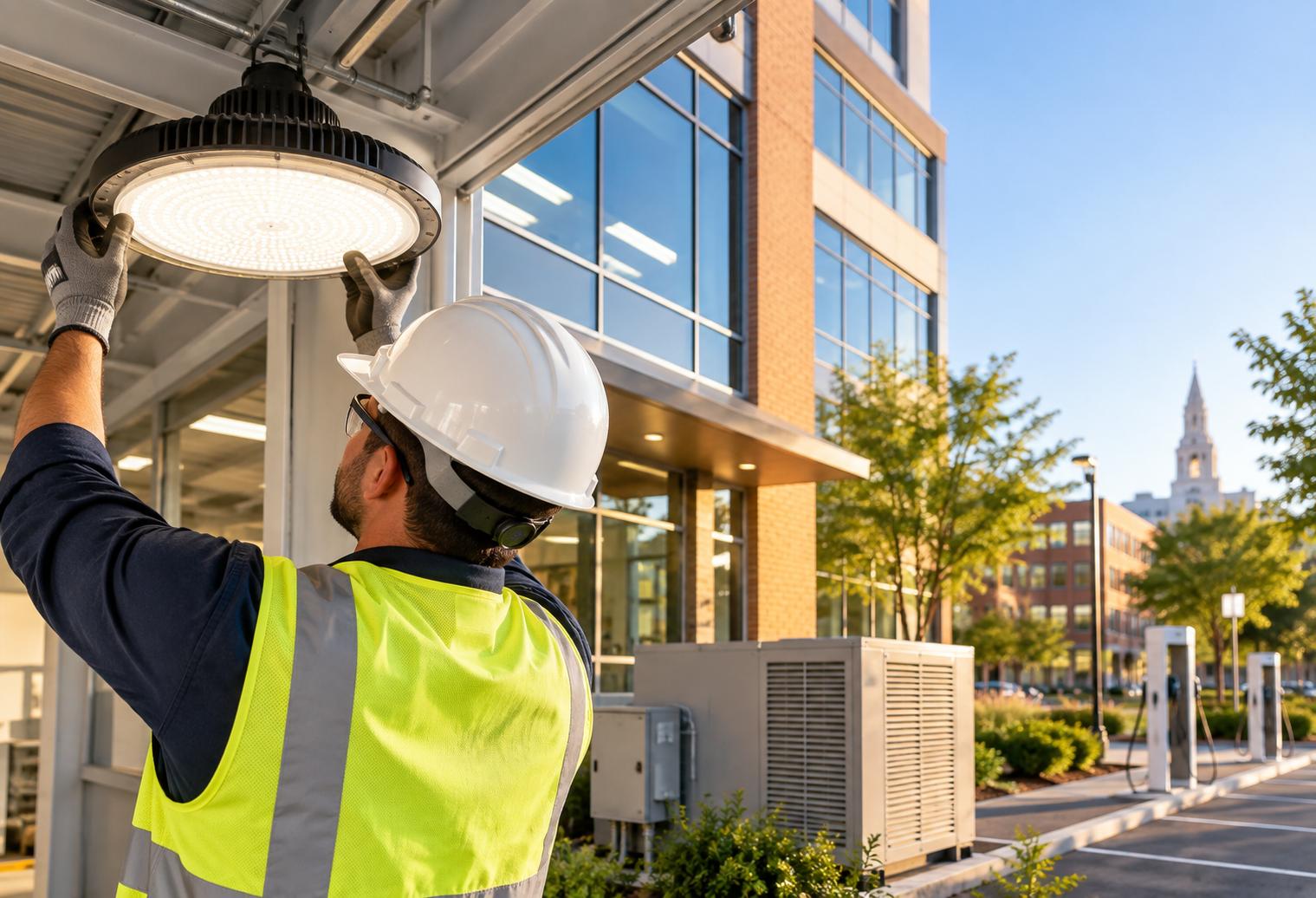
Commercial buildings in Alexandria operate through hot, humid summers, cold winter stretches, and year-round demands from lighting, HVAC systems, office equipment, retail operations, and other electrical loads. For property owners and facility managers, improving electrical efficiency can reduce unnecessary energy use while supporting a more reliable and functional building.
Energy efficiency upgrades for Alexandria's commercial properties can include LED lighting conversions, lighting controls, electrical system evaluations, equipment upgrades, and improvements that better match electrical infrastructure to a building's current needs. The right upgrades depend on the property's age, use, operating schedule, existing equipment, and plans for future electrical loads.
What local property owners should know
- Older lighting and electrical equipment can create opportunities for meaningful efficiency improvements.
- Commercial buildings in Old Town and other established parts of Alexandria may require a different upgrade strategy than newer properties.
- Dominion Energy serves much of Northern Virginia, making utility usage information a useful starting point when evaluating consumption patterns.
- Energy upgrades should account for building operations, electrical capacity, safety, and future needs rather than focusing only on replacing individual fixtures.
- A professional electrical evaluation can help identify which improvements make sense for a specific commercial property.
Why Do Energy Efficiency Upgrades Matter for Alexandria Commercial Buildings?
Energy efficiency upgrades matter for Alexandria commercial buildings because they can reduce avoidable electricity consumption, improve building functionality, and help aging electrical systems better support modern operations. These considerations are especially relevant in a city with a mix of historic structures, offices, retail spaces, restaurants, multifamily properties, and newer commercial development.
Properties around Old Town can have very different electrical characteristics from buildings near Eisenhower Avenue or Potomac Yard. Older buildings may have undergone multiple renovations, while newer facilities may already incorporate more efficient lighting and controls.
Northern Virginia's seasonal temperature swings also affect commercial energy use. HVAC equipment can work heavily during humid summer conditions, while shorter winter days increase the number of hours many businesses rely on interior and exterior lighting.
Walsh Electric helps commercial property owners evaluate electrical improvements based on the needs of their buildings. We can focus on practical electrical upgrades rather than assuming every property needs the same solution.
What Does Local Energy Information Tell Commercial Property Owners?
Local energy information can help commercial property owners identify when, where, and how electricity is being used before they invest in upgrades. Utility bills and building operating schedules can reveal patterns such as consistently high consumption, seasonal increases, or electricity use during hours when portions of a property are normally unoccupied.
Dominion Energy serves customers throughout much of Northern Virginia, and commercial property owners can use their own utility records as a baseline for evaluating changes over time.
Building type matters just as much as total consumption. A restaurant near King Street may have substantially different electrical loads from an office building near Carlyle, a warehouse or service facility closer to the Beltway, or a retail property serving Del Ray.
A useful efficiency plan starts by understanding the property itself rather than comparing its electricity use with an unrelated building.
How Can Inefficient Electrical Systems Affect Local Commercial Properties?
Inefficient electrical systems can increase operating costs and leave Alexandria businesses using more electricity than their day-to-day operations actually require. Outdated lighting, limited controls, aging equipment, and electrical infrastructure that no longer matches the building's use can all contribute to unnecessary consumption.
Lighting is one visible example. Fixtures that remain on in empty offices, storage rooms, restrooms, parking areas, or back-of-house spaces consume electricity without providing a corresponding operational benefit.
Efficiency also affects maintenance and planning. Modernizing appropriate electrical components can give property managers an opportunity to address changing occupancy patterns, new equipment, renovated tenant spaces, and future electrical demands at the same time.
What Are the Warning Signs That a Commercial Property May Need Efficiency Upgrades?
A commercial property may be ready for energy efficiency upgrades when electrical use seems excessive, lighting is outdated, controls are limited, or the building's electrical systems no longer fit its operating patterns. Property managers should look at both visible equipment and changes in how the property is being used.
Common signs include:
- Older fluorescent or other outdated lighting remains in widespread use.
- Lights stay on in unoccupied rooms for long periods.
- Exterior or common-area lighting operates longer than necessary.
- Utility consumption has increased without an obvious operational explanation.
- Different areas of the property have inconsistent lighting quality.
- The building has undergone renovations without a broader electrical review.
- New equipment or tenant needs are changing the property's electrical demand.
- Maintenance teams are repeatedly addressing aging electrical components.
These signs do not automatically identify the cause of high energy use, but they can justify a closer electrical evaluation.
When Should Alexandria Property Owners Call a Commercial Electrician?
Alexandria property owners should call a commercial electrician when an efficiency project involves electrical wiring, panels, controls, circuits, permanent fixtures, or questions about available electrical capacity. Facility teams can safely monitor utility bills, operating schedules, and obvious equipment-use patterns, but modifications to building electrical systems require appropriate professional expertise.
This distinction becomes especially important in older commercial buildings. A seemingly simple lighting project may interact with existing wiring, controls, emergency lighting, or other electrical infrastructure.
Commercial renovations can also create an opportunity for a broader review. Before adding equipment or substantially changing how a space operates, property owners can determine whether existing electrical systems are suitable for the proposed load.
What Common Issues Reduce Electrical Efficiency in Alexandria Buildings?
Common electrical efficiency issues in Alexandria buildings include outdated lighting, limited automation, unnecessary operating hours, aging equipment, and electrical systems that were designed for an earlier use of the property. The specific combination varies considerably between historic buildings, renovated offices, restaurants, retail properties, and newer developments.
1. Outdated Lighting
Older lighting technology may consume more electricity than modern alternatives. In commercial buildings where lights operate for many hours each week, upgrading fixtures can be a logical place to evaluate efficiency.
2. Limited Lighting Controls
Spaces such as conference rooms, storage areas, restrooms, corridors, and back offices may not need continuous full lighting. Appropriate occupancy sensors, timers, or other controls can help match operation to actual use.
3. Changing Building Uses
Commercial properties often evolve. A space originally configured for one tenant may later support different equipment, staffing levels, layouts, and schedules. The electrical system may not have been comprehensively reconsidered during those changes.
4. Aging Electrical Components
Established areas such as Old Town and Del Ray contain buildings from many different construction periods. Older does not automatically mean inefficient, but age and renovation history can make an electrical assessment especially valuable.
5. Uncoordinated Upgrades
Replacing equipment one item at a time without considering the larger electrical system can miss opportunities to improve controls, circuits, capacity planning, and overall building operation.
How Can Commercial Properties Improve Electrical Efficiency?
Commercial properties can improve electrical efficiency by combining routine monitoring with targeted upgrades such as efficient lighting, better controls, and professional evaluation of existing electrical systems. The best approach prioritizes improvements that fit the property's occupancy, operating hours, equipment, and long-term plans.
Property managers can start by reviewing monthly electricity usage and comparing similar periods from year to year. Walk-through inspections can also identify lights operating in vacant spaces, unnecessary after-hours loads, or equipment schedules that no longer match business hours.
Seasonal reviews are useful in Northern Virginia. Before summer cooling demand increases or winter brings longer lighting hours, facility managers can review electrical operations and identify obvious inefficiencies.
DIY work should stop at observation and basic operational adjustments. Wiring changes, fixture installation, circuit modifications, panel work, and other permanent electrical improvements should be handled by qualified professionals.
What Results Can Property Owners Expect From Efficiency Improvements?
Property owners can expect well-planned efficiency improvements to reduce unnecessary electricity use and make building systems better aligned with actual commercial operations, although results vary by property. The impact depends on existing equipment, operating hours, occupancy, the upgrades selected, and the amount of inefficient consumption present before the project.
A property using older lighting for extended hours may have different opportunities than a recently renovated office with modern fixtures and controls.
Efficiency projects can also produce operational benefits beyond electricity consumption. Better lighting controls can simplify daily operation, updated fixtures can improve the usability of work areas, and an electrical assessment can help owners plan for future renovations or equipment additions.
Actual savings should be evaluated using the property's own consumption data rather than assumed percentages or generic estimates.
What Mistakes Should Commercial Property Owners Avoid?
Commercial property owners should avoid treating energy efficiency as a simple equipment-replacement project without considering electrical condition, building use, controls, and future needs. A coordinated approach can reduce the likelihood of investing in improvements that do not address the property's actual sources of unnecessary consumption.
Mistake: Replacing fixtures without reviewing controls.
Consequence: New equipment may still operate unnecessarily for long periods.
Better approach: Evaluate fixtures, schedules, sensors, and controls together.
Mistake: Assuming every older building needs the same upgrades.
Consequence: Money may be directed toward improvements with limited value.
Better approach: Assess the individual property and its renovation history first.
Mistake: Focusing only on immediate energy use.
Consequence: Future tenant improvements or equipment needs may require additional electrical work later.
Better approach: Consider anticipated loads and renovations during planning.
Mistake: Making electrical modifications without professional evaluation.
Consequence: Changes may introduce safety, performance, or compliance concerns.
Better approach: Use a commercial electrician for permanent electrical work.
What Is a Common Energy Efficiency Scenario in Alexandria?
A common Alexandria scenario is an established commercial property that has been renovated over time but still uses a mixture of older lighting, newer equipment, and limited controls. This is a representative local scenario rather than a Walsh Electric case study.
Imagine a multitenant property near Old Town where tenant spaces have changed repeatedly over the years. Some fixtures have been replaced, while hallways, storage rooms, and exterior areas still operate using older equipment and basic switching.
Instead of replacing random components, the property owner could first review operating schedules, existing lighting, controls, and electrical infrastructure. That assessment can help prioritize improvements based on how the building is actually used.
Which Electrical Services Can Support Better Energy Efficiency?
Electrical services that support better energy efficiency include lighting upgrades, control improvements, electrical evaluations, and system modifications needed to accommodate newer commercial equipment. The appropriate scope should be based on the property's existing infrastructure and the owner's operational goals.
For commercial buildings, an electrical project can also be an opportunity to consider future requirements. Renovated tenant spaces, additional equipment, EV charging plans, or other new electrical loads can change what the property needs from its electrical system.
How Should Property Owners Compare Their Upgrade Options?
Property owners should compare efficiency upgrades based on existing equipment condition, operating hours, installation requirements, expected useful life, and how well each option supports future building needs. The lowest upfront cost is not necessarily the only factor that matters for a commercial property.
Simple operational changes may address issues such as lights being left on unnecessarily. Equipment upgrades make more sense when existing components are inefficient, aging, or poorly suited to the space.
Professional electrical work becomes appropriate when improvements involve permanent fixtures, controls, wiring, circuits, panels, or electrical capacity. For many properties, combining operational changes with targeted professional upgrades provides a more complete approach than relying on either one alone.
Where Can Commercial Property Owners Consider These Upgrades?
Commercial property owners throughout Alexandria and surrounding Northern Virginia communities can consider electrical efficiency improvements in offices, retail spaces, restaurants, multifamily common areas, and other business properties. Local needs can differ between Old Town, Del Ray, Carlyle, Potomac Yard, and properties closer to Fairfax County and Arlington County.
The age, configuration, operating schedule, and electrical history of each building should guide the upgrade strategy.
What Can Happen When Inefficient Electrical Systems Are Ignored?
Ignoring inefficient electrical systems can leave a commercial property paying for unnecessary energy use while delaying maintenance and modernization decisions that eventually still need attention. For businesses with long operating hours, even routine inefficiencies can continue month after month until the underlying issue is identified.
Waiting can also complicate future renovations. If a property owner plans to add equipment, renovate tenant areas, or change building use, understanding the existing electrical infrastructure earlier can make project planning more informed.
The goal is not to replace equipment simply because it is older. It is to identify where existing systems no longer meet the property's needs efficiently and plan improvements accordingly.
Frequently Asked Questions About Commercial Energy Efficiency in Alexandria
What energy efficiency upgrade should an Alexandria commercial property consider first?
The first upgrade should be based on where the property is actually wasting electricity. Reviewing utility consumption, lighting, controls, operating schedules, and existing electrical equipment provides a useful starting point. Properties with extensive older lighting may prioritize fixtures and controls, while other buildings may benefit from a broader electrical assessment.
Can LED lighting help Alexandria businesses reduce electricity use?
LED lighting can reduce lighting-related electricity consumption when it replaces less-efficient lighting, but the results depend on the existing fixtures and operating hours. Alexandria businesses should also consider controls and occupancy patterns because an efficient fixture that operates unnecessarily still consumes energy that could potentially be avoided.
Are older Old Town commercial buildings good candidates for electrical upgrades?
Older Old Town commercial buildings can be candidates for electrical upgrades, but age alone does not determine what work is appropriate. Renovation history, wiring, panels, fixtures, controls, occupancy, and current electrical demand should all be evaluated before deciding which efficiency improvements make sense for a specific property.
Does Northern Virginia weather affect commercial energy use?
Northern Virginia weather can affect commercial energy use because seasonal heating, cooling, lighting, and building operating demands change throughout the year. Hot, humid summer periods can increase cooling needs, while shorter winter days may extend lighting hours. Property owners can use seasonal utility records to identify changes in consumption.
Should Alexandria property managers replace all old electrical equipment at once?
No, property managers generally benefit from identifying priorities before deciding on the scope of an upgrade. Some equipment may still suit the building's needs, while other components may offer clearer opportunities for improved efficiency or reliability. An assessment can help organize upgrades around condition, usage, and future plans.
Can lighting controls improve efficiency in commercial buildings?
Lighting controls can improve efficiency by reducing unnecessary operating time in areas that do not require continuous lighting. Conference rooms, restrooms, storage spaces, offices, and other intermittently occupied areas may be candidates for appropriate controls. The right control strategy depends on the building's layout and how each space is used.
Should a commercial property review its electrical system before a renovation?
Yes, reviewing the electrical system before a commercial renovation can help determine whether existing infrastructure can support planned changes. This can be particularly useful in established Alexandria properties that have been modified multiple times. New layouts, tenants, equipment, and operating requirements can all affect electrical needs.
Can Fairfax County or Arlington County commercial properties use the same efficiency approach?
The same general assessment process can apply in Fairfax County and Arlington County, but each building still requires property-specific planning. Existing electrical infrastructure, building age, occupancy, utility consumption, and future loads determine which improvements are appropriate. A strategy that works for one Northern Virginia property may not fit another.
Build a More Efficient Electrical Plan for Your Alexandria Property
Energy efficiency does not have to mean replacing every electrical component in a commercial building. A focused assessment can help identify where equipment, controls, and operating patterns offer practical opportunities for improvement.
We can help local commercial property owners evaluate electrical needs and plan upgrades around how their buildings operate.
Improve Efficiency Without Losing Sight of Reliability
Get a clearer picture of the electrical upgrades that may make sense for your commercial property.

